
The Definitive Guide to SEO in 2025
In the ever-evolving digital ecosystem, the sheer volume of information makes visibility an existential challenge for businesses. Search Engine Optimization (SEO) is not a set of fleeting tricks; it is the fundamental discipline that ensures your website is discovered by the precise audience actively searching for your products, services, or information. SEO is the long-term, high-ROI marketing strategy that builds organic traffic, authority, and trust—signals that are increasingly critical in the age of AI-driven search results.
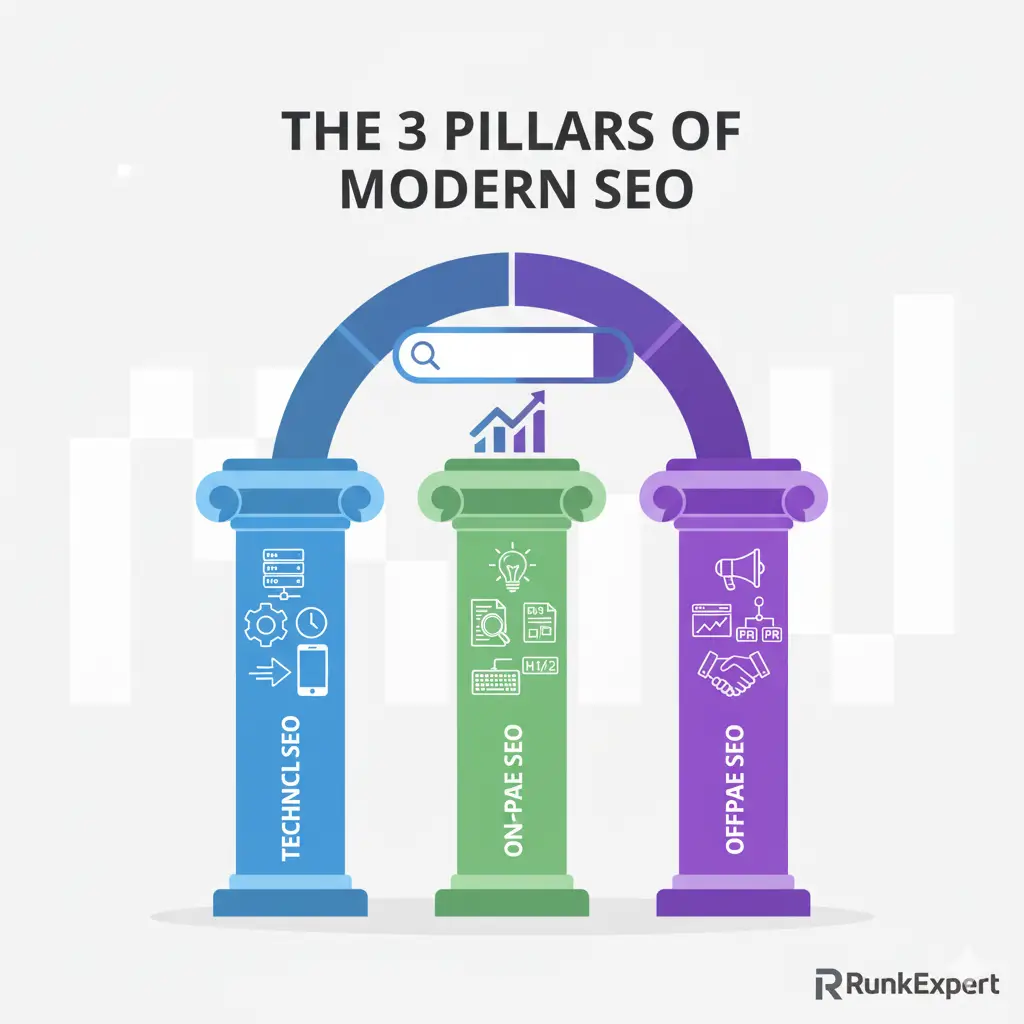
This comprehensive guide serves as your blueprint for mastering the three core pillars of modern SEO: Technical SEO, On-Page SEO (Content Strategy), and Off-Page SEO (Authority Building). We will delve into advanced strategies, discuss the impact of Core Web Vitals, and explore how to future-proof your presence against major algorithm changes. By the end of this article, you will have a complete, actionable framework to transform your website into a powerful magnet for sustainable organic growth.
Chapter 1: The Three Pillars of Modern SEO
Modern SEO is a delicate balance of technical perfection, content excellence, and external authority. Neglecting any one pillar will compromise the performance of the others.
1.1 Technical SEO: The Unseen Infrastructure
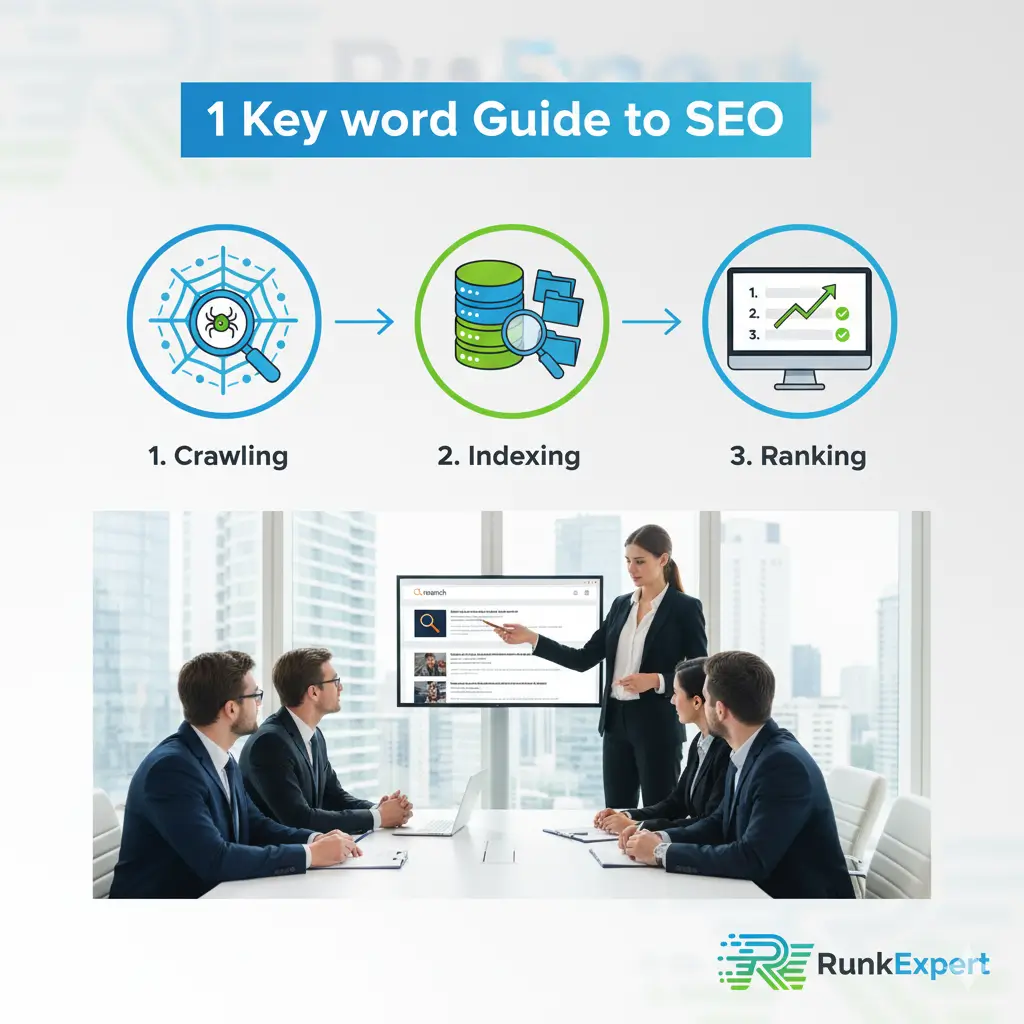
Technical SEO involves optimizing the underlying architecture of your website to help search engine crawlers (bots) efficiently crawl, interpret, and index your pages. It’s the essential foundation that supports all other SEO efforts. If the foundation is weak, the content house will crumble
A. Crawlability and Indexing
XML Sitemaps: A complete map of all pages and files relevant to your site. It tells search engines exactly what pages to crawl and how often, prioritizing important content.
robots.txtFile: A directive file that tells crawlers which parts of your site not to visit, typically used to block low-value pages (e.g., login pages, internal search results) to conserve Crawl Budget.Canonical Tags: Essential for managing duplicate content. A canonical tag (
rel="canonical") tells search engines which version of a page is the “master” copy to be indexed, preventing ranking dilution.URL Structure: Using short, descriptive, keyword-rich URLs (e.g.,
/guide-technical-seoinstead of/p=123?src=blog). This aids both user experience and crawl understanding.
B. Site Speed and Core Web Vitals (CWV)
Google officially prioritizes User Experience (UX), and CWV are the primary metrics for measuring it. Speed is no longer a luxury; it’s a ranking factor.
| Core Web Vital Metric | What It Measures | Target Score | Optimization Focus |
|---|---|---|---|
| LCP (Largest Contentful Paint) | Loading performance (how fast the main content loads). | < 2.5 seconds | Image compression, server response time, critical CSS. |
| FID (First Input Delay) / INP (Interaction to Next Paint) | Interactivity (how fast the page responds to user input). | < 200 milliseconds | Minimizing JavaScript execution, reducing third-party scripts. |
| CLS (Cumulative Layout Shift) | Visual stability (how much content jumps around during loading). | < 0.1 | Specifying image and ad slot dimensions, preloading fonts. |
Actionable Speed Tips: Utilize next-gen image formats (WebP, AVIF), leverage Browser Caching, and employ a Content Delivery Network (CDN) to serve assets from servers geographically closer to the user.
C. Mobile-First Indexing and Security
Mobile-First Indexing: Google uses the mobile version of your website for indexing and ranking. Your site must be fully responsive, with identical content and links on both mobile and desktop versions.
HTTPS (SSL/TLS): Security is a non-negotiable ranking factor. An SSL certificate ensures secure communication between the user’s browser and your server, building user trust
1.2 On-Page SEO: The Art of Content Relevance
On-Page SEO focuses on optimizing the actual content and HTML source code of a page to clearly communicate its topic and value to search engines and users alike.
A. Advanced Keyword Research and Search Intent
| Search Intent Type | User Goal | Content Strategy |
|---|---|---|
| Informational | Learn, find an answer. | Long-form blog posts, guides, tutorials, FAQs. |
| Navigational | Go to a specific site/brand. | Homepage, "Contact Us" page, social profile pages. |
| Transactional | Buy or complete an action. | Product pages, checkout pages, service booking forms. |
| Commercial Investigation | Compare products/services. | Comparison posts, "Best of" lists, reviews, in-depth buyer's guides. |
Long-Tail Keywords: Focus on longer, more specific phrases (e.g., “best budget laptop for graphic design students”) that have lower volume but much higher conversion potential.
B. Content Structuring for Users and AI
Modern search algorithms use Natural Language Processing (NLP) to deeply understand the context of your content.
Title Tags and Meta Descriptions: These are your site’s first impression in the SERPs. The title tag must be keyword-rich and under 60 characters; the meta description must be a compelling call-to-action under 160 characters
Heading Tags (H1, H2, H3, etc.): Use H1 once (for the main topic), and use H2s, H3s, and H4s to create a logical, scannable outline. This signals topic hierarchy to search engines and improves readability for users.
E-E-A-T (Experience, Expertise, Authoritativeness, Trustworthiness): Google emphasizes content written by those with real-world experience. Demonstrate your expertise by citing sources, linking to authoritative papers, and showcasing author credentials
C. Internal Linking and Topic Clusters
Topic Clusters: Organize your content around a Pillar Page (a comprehensive guide) that links out to several Cluster Pages (detailed sub-topics). This architecture establishes thematic authority and ensures “link juice” flows to all related, high-priority pages.
1.3 Off-Page SEO: Building Authority and Trust
Off-Page SEO encompasses all actions taken outside of your own website to affect its search engine rankings. Its primary focus is on building high-quality backlinks—external links from other reputable websites that point back to yours. Backlinks act as “votes of confidence,” signaling your site’s authority.
A. The Link Building Hierarchy: Quality Over Quantity
Not all links are created equal. Focus on the quality of the linking domain (Domain Authority/Rating) and the relevance of the content.
Relevance: A link from an SEO tool blog to your SEO guide is highly relevant; a link from a random culinary blog is not.
Anchor Text: The clickable text of the link. It should be varied and contextually relevant (e.g., “this comprehensive guide” is better than always using “SEO guide“).
Link Type (
dofollowvs.nofollow/sponsored/ugc): Only standard (dofollow) links pass full authority, but a natural link profile requires a healthy mix.
B. Advanced Link Acquisition Strategies
The Skyscraper Technique: Find high-performing content in your niche, create a piece that is significantly better (longer, more detailed, more current), and pitch it to sites that linked to the original, inferior content.
Broken Link Building: Find a reputable site with a broken link (404 error) related to your niche, inform the webmaster, and suggest your superior content as a replacement. It’s a win-win.
Digital PR: Creating content that is newsworthy (original data, industry surveys, expert opinions) and pitching it to journalists, who often link back to the data source.
Resource Page Link Building: Identifying “Resources” or “Links” pages on authoritative sites and asking them to include your relevant content.
| Link Building Strategy | Description | Key Benefit |
|---|---|---|
| Guest Posting | Writing a unique article for another relevant website. | Direct control over link and anchor text. |
| Broken Link Building | Fixing a broken link on an external site with your page. | High success rate, as you are offering a solution. |
| Digital PR | Promoting original research or data to media outlets. | Attracts links from very high-authority news domains. |
| Brand Monitoring | Searching for unlinked mentions of your brand name. | Easy to convert mentions into natural, high-trust links. |
Chapter 2: Technical Deep Dive: Beyond the Basics
To truly future-proof your website, you must master the advanced technical aspects that often distinguish high-ranking sites from the rest.
2.1 Schema Markup and Rich Results
Schema markup (or structured data) is a standardized vocabulary you can add to your site’s HTML to help search engines better understand the content. This is crucial for obtaining Rich Results (like star ratings, FAQs, or recipes) in the SERPs, which dramatically increase Click-Through Rate (CTR).
Key Schema Types:
FAQ Schema: Use for pages with questions and answers.
HowTo Schema: Use for step-by-step guides.
Product Schema: Essential for e-commerce, showing price, availability, and review ratings.
Local Business Schema: Critical for Local SEO, providing business name, address, phone number (NAP), and hours.
Implementation: Google prefers the JSON-LD format. Always test your implementation using Google’s Rich Results Test tool
2.2 JavaScript SEO and Rendering
As more sites use JavaScript frameworks (React, Angular, Vue), ensuring Google can properly render the content is a top technical priority.
Server-Side Rendering (SSR) or Static Site Generation (SSG): These methods pre-render the JavaScript on the server or during the build process, sending fully-formed HTML to the crawler. This is highly recommended for speed and crawlability.
Dynamic Rendering: Serving a client-side (JavaScript) version to users and a pre-rendered, static HTML version to bots. This is a complex workaround, but sometimes necessary for heavy JavaScript sites.
2.3 Site Architecture and URL Hierarchy
A well-planned site structure is a crucial signal of authority and topical relevance. It follows a “pyramid” structure:
Homepage: The authority apex.
Pillar Pages/Categories: Broad, high-level topics (e.g., “Technical SEO,” “Content Marketing”).
Cluster Pages/Subcategories: Specific articles and posts that fall under the pillars.
“Three-Click Rule”: Every important page on your site should be accessible within a maximum of three clicks from the homepage, ensuring both users and bots can easily find your high-value content.
Chapter 3: The Content Strategy of High-Performers
Content is the vehicle for your keywords and the primary way you establish E-E-A-T. A high-ranking content strategy is less about writing words and more about answering the searcher’s query comprehensively and uniquely.
3.1 Content Gap Analysis and Topic Modeling
Instead of only targeting individual keywords, successful SEO involves topic modeling—aiming to be the single best resource on a broad subject.
Content Gap Analysis: Identify the questions your target audience is asking that your website does not currently answer, but your competitors do. This pinpoints opportunities for new, high-impact content.
Holistic Content: When writing, use secondary and related keywords naturally throughout the text (Semantic SEO). This tells Google that your page covers the topic holistically, not just the single primary keyword.
3.2 Optimizing for AI and Featured Snippets
With the rise of AI-powered search (like Google’s SGE/AI Overviews), content structure is more important than ever for being chosen as the definitive answer.
Inverted Pyramid Style: Start with the main answer in the first paragraph, then expand on the details. This format is perfect for Featured Snippets and quick AI summaries.
Definitions and Lists: Use clear, labeled lists and tables (like the ones in this article) and “What is X?” definition boxes. AI models prefer structured data for extraction.
TLDR Summaries: Including a “Too Long; Didn’t Read” summary at the top helps busy users and gives the AI a perfect piece of text to quickly summarize the content’s value
3.3 Content Refreshing and Pruning
SEO is not a one-time task. High-performing sites regularly audit and refresh their existing content.
Content Refreshing: Update statistics, replace outdated steps, add new examples, and improve clarity. A significant update can often trigger a “freshness” boost in the rankings.
Content Pruning: Identify “thin” or low-quality content that provides little value and has no traffic. You can either noindex it (preventing it from being crawled) or merge it with a more substantial piece (301 redirect). This focuses your site’s authority on your best pages.
Chapter 4: Measurement, Analysis, and the Long Game
SEO is data-driven. Your strategy is only as good as your ability to measure its impact and adapt to new insights.
4.1 Essential SEO Tools and Analytics
| Tool | Primary Purpose | Key Features |
|---|---|---|
| Google Search Console (GSC) | Website health and organic performance monitoring. | Indexing issues, Core Web Vitals report, actual keyword ranking data. |
| Google Analytics 4 (GA4) | User behavior and conversion tracking. | Traffic source analysis, engagement rate, conversion funnels. |
| Ahrefs / Semrush | Competitor analysis and keyword/link research. | Keyword difficulty scores, backlink audits, site health scores. |
| PageSpeed Insights | Technical speed diagnostics and recommendations. | CWV scores, detailed suggestions for LCP, FID, and CLS improvements. |
4.2 Key Performance Indicators (KPIs)
Go beyond simply tracking rankings. Focus on metrics that directly correlate with business success:
Organic Traffic (Users/Sessions): The core metric showing visibility.
Organic Click-Through Rate (CTR): Measures the effectiveness of your title tags and meta descriptions in the SERP.
Conversion Rate: The percentage of organic visitors who complete a goal (purchase, form submission, lead).
Keyword Visibility/Share of Voice: The percentage of search results your brand owns for a key topic cluster.
4.3 The Future-Proof Mindset
The only constant in SEO is change. Algorithms will continue to evolve, but the core principles remain steady:
Prioritize the User: Google’s ultimate goal is to satisfy the searcher. Focus on fast loading, easy navigation, and providing the most valuable, trustworthy answer.
Build a Brand: Strong brands attract organic links, benefit from higher CTRs, and are less susceptible to core algorithm updates.
Integrate E-E-A-T into Workflow: Ensure all content is vetted, sourced, and clearly authored by an expert
Conclusion: Achieving Digital Dominance with RunkExpert
SEO is not a one-off project; it is a marathon that requires commitment, technical precision, and relentless quality. By mastering the three pillars—optimizing your site’s Technical infrastructure for speed and crawlability, delivering On-Page content that perfectly satisfies user intent, and building external Authority through high-quality backlinks—you lay the groundwork for long-term organic success.
The digital landscape of 2025 rewards the dedicated expert. Follow this guide to turn your website into the authoritative, high-ranking destination your audience is actively searching for, and secure your place at the top of the SERPs.
Tackling SEO is a marathon, not a sprint. You’ve mastered the framework, but implementing a winning strategy requires dedicated expertise. Ready to stop guessing and start dominating organic search?
Pingback: Elementor #3367 - runkexpert.com
Pingback: Top 8 Jobs Freelance en Ligne pour Étudiants (Flexibles)
Pingback: Best Web Hosting 2026: Simple Guide for Beginners
Pingback: SEO vs GEO: Understanding the Differences - runkexpert.com